


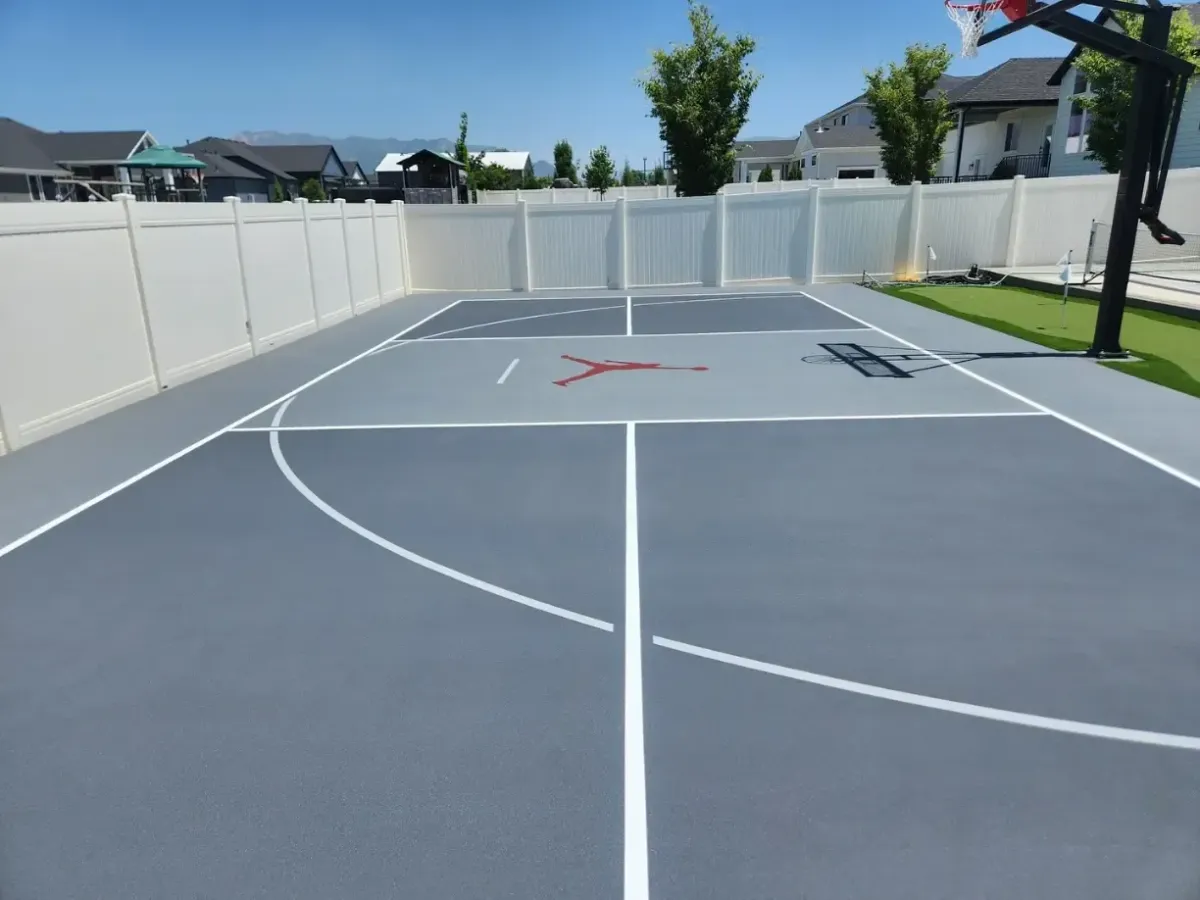
How to Convert a Basketball Court Into a Pickleball Court
The demand for pickleball courts has grown quickly in neighborhoods, schools, parks, HOAs, and private recreation spaces, making it practical to convert basketball court into pickleball court layouts instead of building new facilities from scratch. In South Florida, where outdoor sports are part of daily life, an underused basketball court can often become a high-performing pickleball space with the right planning, surface preparation, coatings, line striping, and net system.
A good conversion is more than painting new lines over an old slab. Basketball courts and pickleball courts have different dimensions, movement patterns, surface expectations, and safety needs. If the existing court has cracks, drainage problems, fading coatings, or slippery areas, those issues should be corrected before the pickleball layout is added.
South Florida’s climate also plays a major role. Heat, humidity, heavy rain, salt air, mold growth, and UV exposure can shorten the life of outdoor sport surfaces if they are not built and maintained correctly. That is why a professional conversion should focus on durability, drainage, traction, and long-term usability.
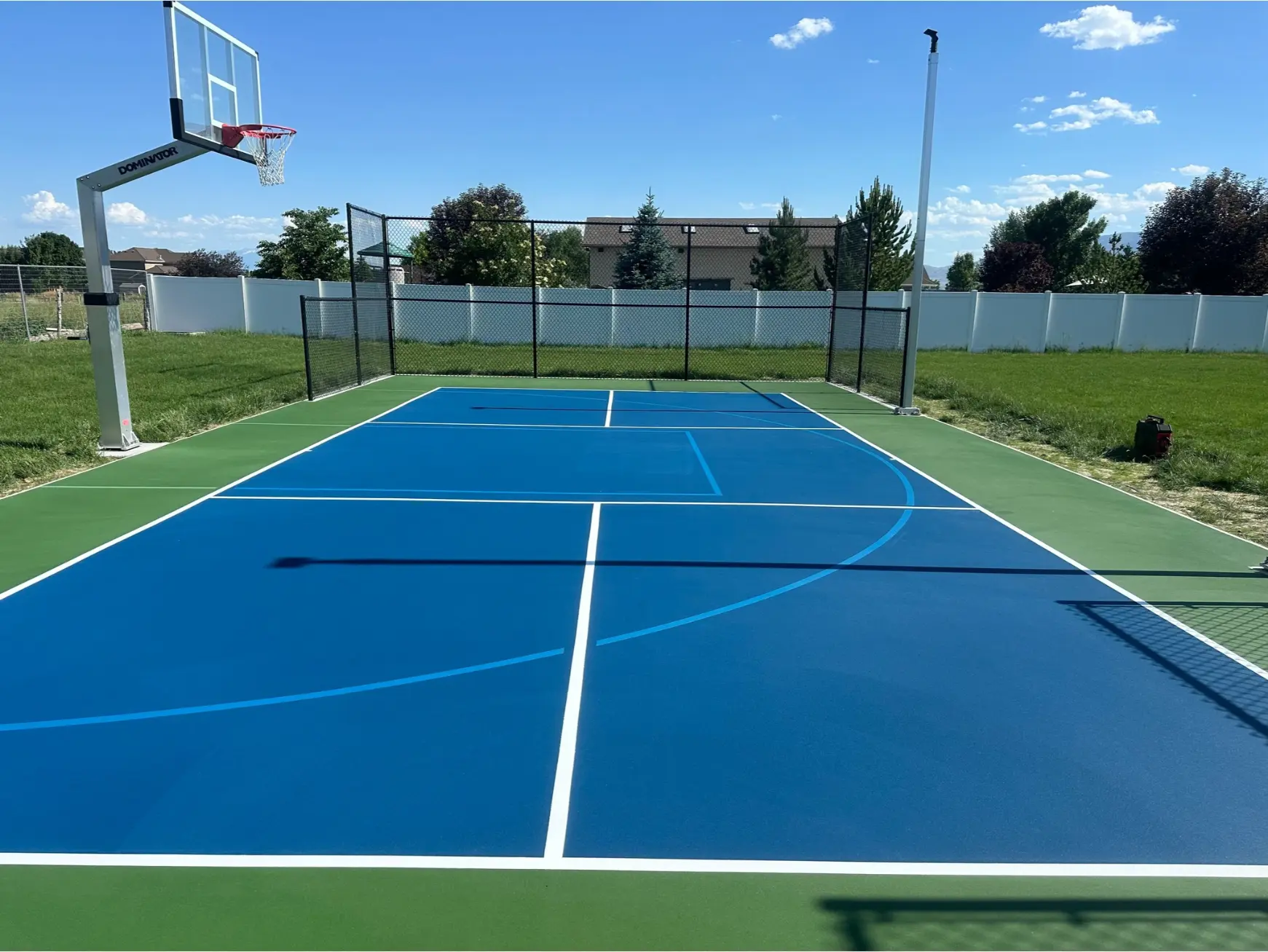
How to convert basketball court into pickleball court Layouts the Right Way
The first step is confirming whether the existing basketball court has enough usable space. A regulation pickleball court measures 20 feet wide by 44 feet long. However, safe play requires more room than the painted lines alone. Players need space behind baselines and along sidelines for serves, returns, lateral movement, and angled shots.
For recreational play, a total footprint around 30 feet by 60 feet is often recommended for one court. Larger clearances are preferred for more competitive settings. Many full basketball courts can fit multiple pickleball courts, while half-court basketball pads are often suitable for one dedicated or shared-use pickleball court.
A layout review should consider:
Total available court dimensions
Safe run-off space around each pickleball court
Existing basketball hoops and pole locations
Fence placement and gate access
Drainage direction and low spots
Player traffic between courts
Sun angle during common play times
Whether basketball will remain active
If the space will remain multi-use, the pickleball layout should avoid creating unsafe conflicts with basketball equipment. Portable nets are often best for shared courts because they can be moved when basketball is being played.
Ace Coatings South Florida can help evaluate whether an existing basketball court is better suited for one pickleball court, multiple courts, or a shared multi-sport layout. This early planning step helps prevent crowded designs and confusing game lines.
Layout Details When You convert basketball court into pickleball court Spaces
Accurate line placement is essential. Even small layout mistakes can affect gameplay, especially around the non-volley zone, service boxes, and baselines.
A standard pickleball layout includes:
A 20-foot by 44-foot playing area
A 7-foot non-volley zone on each side of the net
Two service boxes on each side
A centerline dividing the service areas
2-inch-wide boundary lines
Net height of 36 inches at the sidelines and 34 inches at the center
Line color should contrast clearly with the court surface and any existing basketball markings. If basketball will remain the primary sport, basketball lines are often kept in white while pickleball lines use another visible color. If pickleball becomes the primary use, the pickleball lines should be the easiest to see.
For multi-court conversions, spacing matters just as much as line accuracy. Courts placed too close together can create safety issues when players chase wide shots or move between games.
Surface Prep Before You convert basketball court into pickleball court Surfaces
Surface preparation is where many conversion projects succeed or fail. An aging basketball court may have cracks, low areas, peeling coatings, mildew, slick spots, or worn texture. Painting pickleball lines over these problems may create a court that looks new briefly but performs poorly.
Before resurfacing or striping, the court should be cleaned and inspected carefully. South Florida courts often collect mildew, algae, sand, leaves, and moisture-related staining. These contaminants can interfere with coating adhesion and create slip hazards.
A proper preparation process may include:
Removing debris, dirt, mold, and loose coatings
Pressure washing with appropriate care
Treating mildew or organic growth
Repairing cracks with sport-surface materials
Leveling birdbaths or low areas
Checking slope and drainage
Allowing the surface to dry fully before coating
Testing adhesion where old coatings remain
Cracks should be addressed before new coatings are applied. Some cracks are surface-level and can be filled; others may indicate base movement. If cracks continue reopening after repair, the issue may be deeper than the coating system.
Low spots are another common concern. If water remains after rain, it can delay play, stain the surface, increase slip risk, and weaken coatings over time. In South Florida, where heavy rain can arrive quickly, drainage should be taken seriously.
Coating Choices to convert basketball court into pickleball court Areas
Once the base is clean and repaired, the surface system can be selected. The best option depends on the condition of the existing court, expected use, budget, and whether the space will remain multi-sport.
Acrylic resurfacing systems
Acrylic sport coatings are a common choice for pickleball conversions. They create a consistent surface with reliable traction, strong color options, and good ball response. Texture can be adjusted with aggregate to help balance grip and play speed.
Cushioned acrylic systems
Cushioned systems add resilient layers beneath the color coats. These can reduce impact on joints and make the court more comfortable, especially for communities with frequent play or older players.
Modular sport tiles
Tiles may be an option when the existing court has drainage or cracking concerns, but they change the feel of play compared with acrylic coatings. They should be installed over a stable, properly prepared base.
Full resurfacing before striping
If the basketball court is faded, slippery, or worn, resurfacing before adding pickleball lines is usually the better long-term choice. This gives the entire court a cleaner appearance and helps the new lines last longer.
For outdoor pickleball play, surface texture should support safe movement and consistent bounce. Linework should be sharp, accurate, and applied with sport-grade materials. Planning around USA Pickleball guidance can help ensure the final layout feels familiar and playable.
Equipment and Maintenance After You convert basketball court into pickleball court Use
Net selection depends on whether the court will be dedicated to pickleball or shared with basketball. For shared spaces, portable pickleball nets are usually the most practical option. They can be rolled or carried into place, adjusted to proper height, and stored when basketball is being played.
For dedicated pickleball courts, permanent net posts provide a cleaner look and better net tension. However, post placement must be accurate and should not interfere with other activities. Sleeved posts are often useful because they allow removal or replacement without major court work.
Other upgrades can improve the court experience:
LED lighting for evening play
Windscreens for exposed courts
Fencing or divider nets between courts
Seating or shaded rest areas
Storage for portable nets and paddles
Clear signage for shared-use rules
Drainage improvements around the court perimeter
Ace Coatings South Florida can help property owners decide whether a simple line conversion is enough or whether resurfacing, equipment upgrades, or drainage corrections should be included. This is especially helpful for community courts that need to serve many players safely.
Maintenance Tips After You convert basketball court into pickleball court Areas
South Florida courts need consistent maintenance because heat, humidity, salt air, and rain can accelerate surface wear. A converted court should be kept clean, dry when possible, and free of materials that trap moisture.
Recommended maintenance includes:
Sweep or blow off leaves, sand, and debris regularly
Clean mildew or algae before it spreads
Rinse salt residue from coastal courts when needed
Keep drainage paths open after storms
Avoid harsh chemicals that can damage acrylic coatings
Do not drag heavy equipment across the surface
Store portable nets during severe weather
Inspect cracks and low spots after heavy rain
Schedule resurfacing before traction becomes poor
Acrylic courts typically need resurfacing after years of use, depending on traffic, exposure, and maintenance quality. In high-use communities, the timeline may be shorter. Faded color, slippery areas, peeling coatings, and worn lines are signs that the surface should be professionally evaluated.
Ace Coatings South Florida can also help plan maintenance cycles so the court remains safe, attractive, and playable instead of waiting until major repairs are needed.
Conclusion
Converting an underused basketball court into a pickleball court is one of the most efficient ways to meet growing demand for recreational space. When done correctly, the project can extend the life of an existing court, improve community use, and create a cleaner, safer playing experience.
The most important steps are confirming the layout, repairing the surface, choosing the right coating system, painting accurate lines, and selecting the proper net setup. In South Florida, climate-specific planning is also essential because rain, humidity, heat, and salt exposure can affect performance and longevity.
With thoughtful design and professional execution, an aging basketball court can become a highly active pickleball destination for families, residents, students, or club members.
