


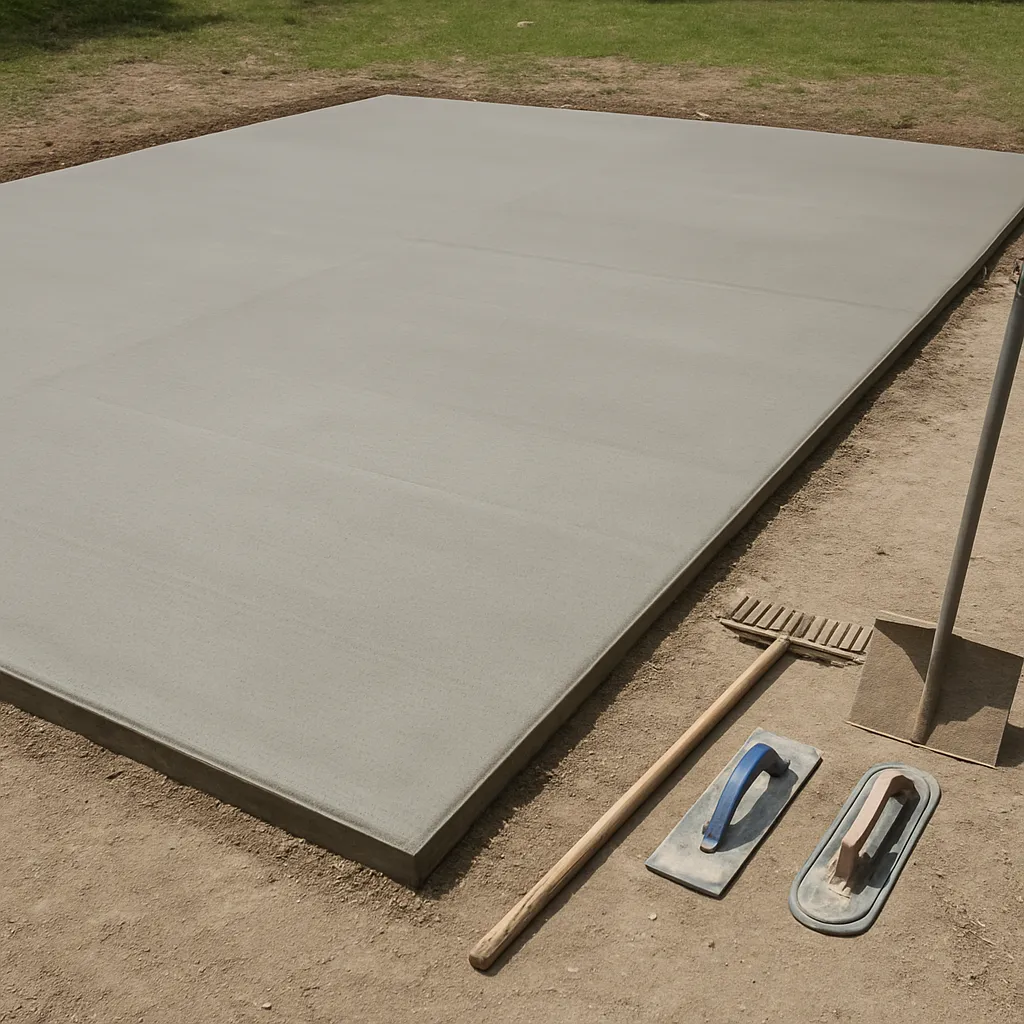
Concrete Slab for Pickleball Court: Build It Once, Build It Right
Imagine stepping onto your perfect backyard court—clean bounce, no cracks, no puddles. Now imagine that same surface one year later riddled with fractures and low spots that never dry. The difference between those two outcomes is not the color coating or line paint. It’s the Concrete Slab for Pickleball Court, which functions as a precision athletic foundation, not a casual patio pour. Nearly every court failure begins before concrete is ever delivered. This guide explains how to build a slab that performs consistently, survives harsh conditions, and supports years of competitive play.

Concrete Slab for Pickleball Court: Site Preparation and Ground Engineering
Before any forms are set, the real work begins below grade. Site preparation determines whether a slab lasts decades or fails prematurely.
Professional builders begin by excavating native soil and installing a 4–6 inch compacted gravel sub-base. This layer distributes loads evenly, prevents settlement, and protects against soil movement. In areas with expansive soils or seasonal moisture changes, this step is critical.
Drainage is equally non-negotiable. A slab that appears “perfectly flat” is actually defective. Courts must be built with a subtle 1% slope—approximately one inch per ten feet—so water sheds efficiently. Without it, standing water damages surface coatings and creates unsafe play conditions.
Specialists such as Ace Coatings South Florida engineer drainage and base compaction specifically for humid, high-rainfall regions, where moisture intrusion is the leading cause of slab failure.
Concrete Slab for Pickleball Court: Sub-Base Depth and Drainage Accuracy
A properly compacted sub-base combined with precise slope control is the single best predictor of long-term slab performance. Contractors who rush this phase almost always leave behind hidden defects that surface months later.
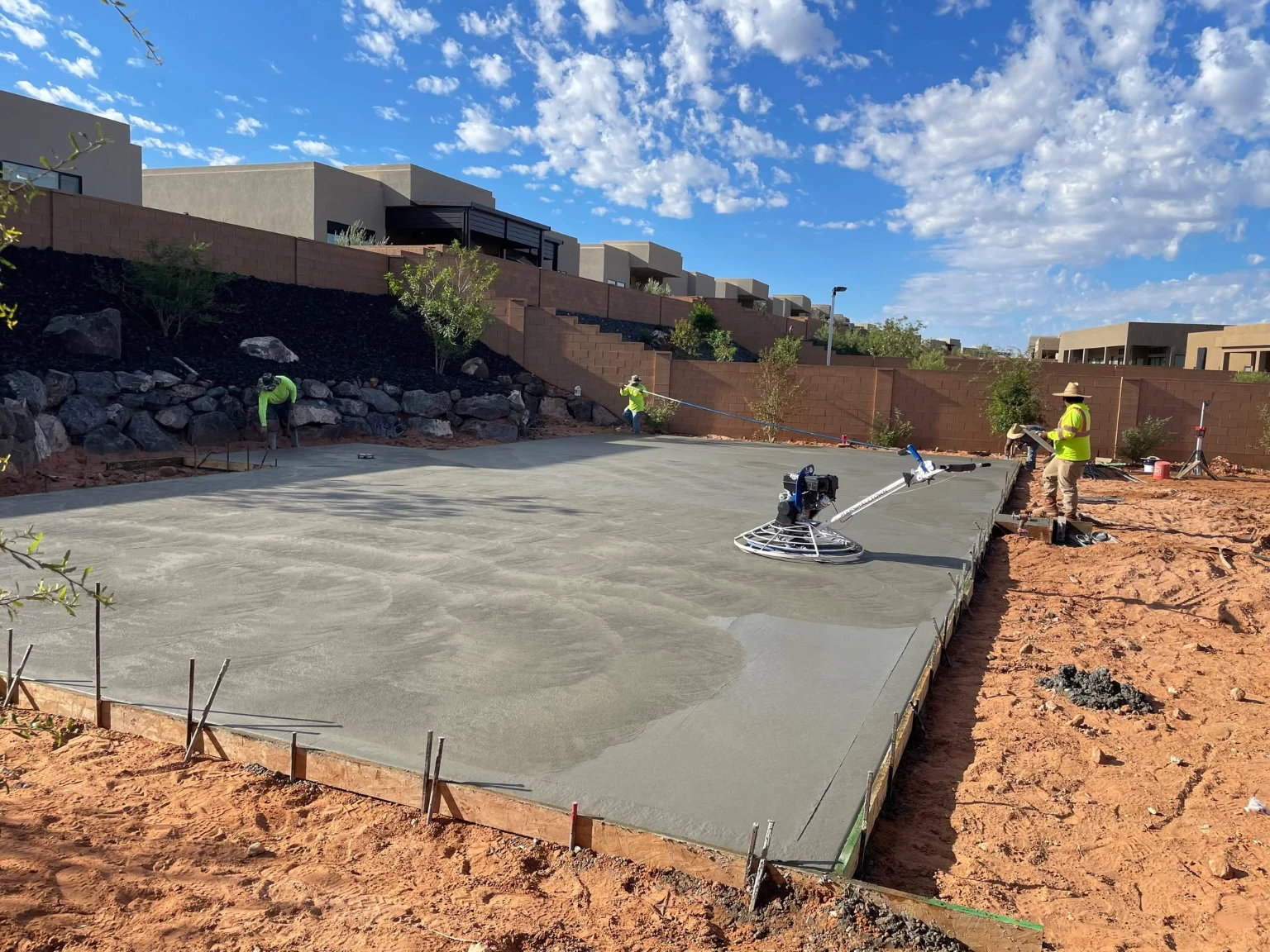
Concrete Slab for Pickleball Court: Reinforcement, Vapor Barriers, and Mix Design
Once the base is prepared, the slab’s internal structure becomes the focus. Concrete alone is strong in compression but weak in tension, which is why reinforcement is mandatory.
Steel reinforcement—typically #3 or #4 rebar in a grid pattern—controls crack propagation and maintains slab integrity. Beneath the steel, a 6-mil vapor barrier must be installed to block moisture migration from the ground. Without it, surface coatings blister and delaminate from below.
Concrete strength matters just as much. A standard driveway mix is insufficient. Courts require a minimum 4000 PSI mix, often enhanced with fiber mesh for micro-crack resistance. In freeze-prone climates, air-entrainment additives protect the slab from internal expansion.
Installers working to USA Pickleball construction recommendations emphasize these specifications because they directly affect bounce consistency and surface longevity.
Concrete Slab for Pickleball Court: Why Mix Quality Prevents Early Failure
Higher PSI concrete, fiber reinforcement, and moisture control do not increase visible beauty—but they dramatically reduce cracking, surface wear, and coating failure over time.
Concrete Slab for Pickleball Court: Curing, Expansion Joints, and Longevity
The most misunderstood phase of construction happens after the pour. Concrete does not “dry”—it cures through a chemical hydration process that requires moisture.
If water evaporates too quickly, the slab’s surface becomes weak and brittle. Proper curing means maintaining moisture for at least seven days, using curing blankets or controlled misting. This step alone can double the slab’s usable lifespan.
Expansion and control joints must also be planned and cut strategically. These joints allow the slab to move without cracking randomly. Incorrect joint placement almost guarantees structural failure.
In premium builds, some clients choose post-tensioned slabs, where internal steel cables are tensioned after placement. This method actively compresses the slab, dramatically reducing cracking risk. Contractors such as Ace Coatings South Florida offer this approach for facilities seeking maximum durability in challenging soil or climate conditions.
Concrete Slab for Pickleball Court: Curing Practices That Protect Performance
Proper curing, joint placement, and finishing techniques are what separate a recreational slab from a professional athletic surface built to endure years of play.
A Professional Checklist for a Crack-Resistant Court
Use this checklist when interviewing contractors. A qualified builder will explain each item clearly and confidently:
4–6" compacted gravel sub-base
Verified 1% drainage slope
#3 or #4 rebar grid reinforcement
6-mil vapor barrier installed
4000+ PSI concrete mix
Minimum 7-day wet curing plan
Proper control and expansion joints
Experienced teams like Ace Coatings South Florida use this checklist as a baseline—not an upgrade—because skipping any item compromises the entire court.
Final Thoughts
A pickleball court is only as good as the slab beneath it. Surface coatings can be repaired, lines can be repainted—but a failing slab means starting over. Building correctly the first time protects your investment, ensures consistent play, and eliminates long-term frustration.
Contact us at Ace Coatings South Florida to review your site, discuss slab options, and build a court foundation designed for performance, durability, and peace of mind.
